Raw Crystals: How to Choose Them Well
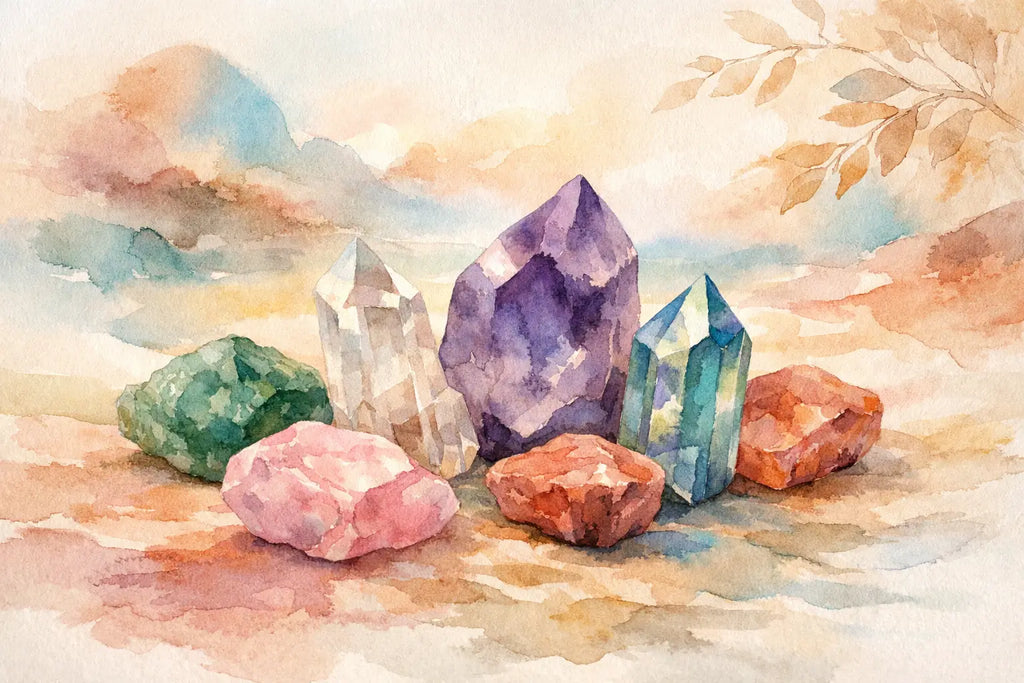
Some crystals are meant to be glossy and finished. Others are at their most compelling before any polishing ever begins. Raw crystals carry that just-found feeling - natural texture, mineral character, and a kind of presence that feels a little closer to the earth. For many collectors and spiritually minded shoppers, that is exactly the appeal.
A raw piece can feel more personal than something highly uniform. It may have irregular edges, natural fractures, layered color, or a matrix that tells you where and how it formed. Those details are not flaws. Often, they are the reason a piece feels special in the first place. When you shop for raw crystals, you are not just choosing by type. You are choosing by shape, mood, structure, and story.
Why raw crystals feel different
There is a reason people are drawn to raw material even when polished options are available. Raw crystals tend to preserve more of the mineral's natural growth patterns, which makes each piece feel singular. No two points line up exactly the same way. No cluster forms with factory precision. That organic variation is part of the beauty.
For collectors, raw pieces often offer a more honest look at the specimen itself. You can see crystal habit, matrix, luster, and natural color zoning in a way that polishing can soften or hide. For spiritual shoppers, raw crystals can feel less edited and more grounded. The texture matters. The weight matters. The fact that the stone still looks like something the earth made matters.
That said, raw is not automatically better. It depends on what you want. If you are looking for a smooth palm stone to carry daily, polished may make more sense. If you want a display piece with presence or a specimen that feels closer to its source, raw is often the more meaningful choice.
How to choose raw crystals with confidence
The best raw crystals are not always the biggest or the brightest. They are the pieces that feel well selected, visually balanced, and true to the material. Start with the crystal itself, but do not stop there.
Look at structure before size
A large raw piece can be impressive, but structure usually tells you more about quality. Is the formation interesting? Does the crystal have visible terminations, natural sparkle, layered growth, or a pleasing silhouette? A smaller specimen with strong character often feels far more special than a larger one that looks flat or generic.
This is especially true if you are buying online. Measurements matter, of course, but photos should help you understand the piece's shape and mineral personality. A good seller will show enough detail for you to see whether the specimen has depth, texture, and natural beauty rather than relying on scale alone.
Expect natural variation
Raw means nature had the final word. You may see uneven edges, minor chips, matrix, inclusions, color shifts, or internal fractures. In many minerals, those are completely normal. They can even be desirable, depending on the specimen.
The key is knowing the difference between natural character and poor condition. A piece can be earthy, irregular, and wonderfully raw while still being stable, attractive, and thoughtfully chosen. If a crystal looks overly damaged, excessively dusty, or hard to identify in photos, that is worth a second look.
Pay attention to sourcing
With raw crystals especially, sourcing matters. These pieces often carry a stronger connection to place because they have been altered less. Knowing where they come from and whether that sourcing is handled with care adds real value.
This does not need to feel complicated, but it should feel transparent. A trustworthy crystal shop should be comfortable sharing origin when known, describing relationships with suppliers, and being clear about what a piece is. For many shoppers, ethical sourcing is not a bonus. It is part of what makes the crystal feel good to bring home.
Raw crystals for display, ritual, and gifting
One of the nicest things about raw pieces is how versatile they are. They can look elevated in a collector's cabinet, grounding on a bedside table, or deeply personal as a gift. The right choice depends less on trend and more on intention.
If you are buying for display, focus on form. A raw fluorite with dramatic zoning, a quartz cluster with bright luster, or a rose quartz chunk with soft presence can anchor a space beautifully. The piece should look complete from the angle where it will live. Flat bases, balanced silhouettes, and strong visual texture matter more than people sometimes realize.
If you are choosing for spiritual use, think about how you want the crystal to feel in your environment. Some people prefer raw crystals because they bring a more grounded, untouched energy to meditation, altar spaces, or daily rituals. Others like the tactile experience - the weight in the hand, the cool surface, the ridges and contours that make the stone feel unmistakably real.
For gifts, raw pieces can be especially meaningful because they feel individual. They are ideal when you want to give something beautiful without making it feel mass produced. A carefully chosen raw crystal can say, I wanted this to feel personal.
Common questions about quality
Newer buyers often worry that they will not know how to judge a raw specimen. That concern is understandable, especially online where many shops use vague descriptions or overly filtered images. The good news is that quality gets easier to spot once you know what to notice.
Clarity is not always the goal. Some minerals are prized for transparency, while others are loved for texture, matrix, banding, or unusual formations. Saturated color can be lovely, but so can soft natural tone. A piece does not need to be perfect to be premium. In fact, overly uniform raw material can sometimes feel less convincing than a stone with natural complexity.
It also helps to remember that different minerals show quality in different ways. A raw amethyst cluster might be judged by crystal points, color depth, and sparkle. A raw citrine piece may prompt more careful questions, since genuine natural citrine is far less common than heat-treated material sold under the same name. A raw black tourmaline specimen may be compelling because of its striation and weight rather than high shine.
This is where curation makes a real difference. Thoughtful sellers do some of that quality filtering for you. Instead of sorting through endless inventory, you get pieces chosen for beauty, stability, and character.
Raw crystals vs polished pieces
This is not really a competition. It is more about experience.
Polished crystals tend to feel refined, portable, and predictable. They are easy to hold, easy to style, and often easier for beginners to understand at a glance. Raw crystals feel more elemental. They ask you to appreciate asymmetry, natural growth, and the details that make a specimen feel alive.
Some people build collections that include both. A polished tower may bring clean lines to a shelf, while a raw cluster beside it adds movement and texture. A carved heart can feel tender and giftable, while a raw stone can feel grounding and deeply rooted. It depends on your space, your taste, and what kind of connection you want with the piece.
What makes a raw crystal feel worth keeping
Usually, it is not just the mineral name. It is the moment you see a piece and feel that it has presence. Maybe the formation is dramatic. Maybe the color is unusually soft. Maybe it reminds you that natural beauty does not need to be perfected to be striking.
That is why hand selection matters so much in this category. Raw crystals should still feel curated. They should feel chosen with care, photographed honestly, and presented in a way that respects both their beauty and their origin. At Bellissima Crystals, that philosophy is simple: every piece should feel like it means something.
When you are choosing raw crystals, let yourself care about both the practical and the personal. Ask where the piece came from. Notice the structure. Imagine where it will live. And if one crystal keeps pulling your attention back, that is often the clearest answer of all.
The best piece is not always the most expensive or the most flawless. It is the one that still feels right when you picture it in your hands, in your home, or given with heart to someone you love.