How to Display Crystal Towers With Intention

A crystal tower is more than a pretty point on a shelf. Its vertical shape naturally draws the eye upward, giving even a small piece a sense of presence. Learning how to display crystal towers well is partly about styling, but it is also about honoring the character of each stone: its color, pattern, size, origin, and the feeling that made you choose it in the first place.
The best display does not need to look like a store shelf or a perfectly staged photo. It should feel considered, safe, and personal. Whether you own one special tower or a growing collection, a few thoughtful choices can help every piece feel at home.
Start with a stable, intentional surface
Crystal towers are designed to stand upright, but they still deserve a secure foundation. Choose a flat, sturdy surface away from the edge of a shelf, windowsill, or nightstand. A low, solid bookcase, dresser, altar, or console table usually works beautifully. If you display towers near pets, children, or a busy doorway, place them farther back on the surface or inside a cabinet with glass doors.
Avoid balancing a tower on a soft blanket, uneven tray, or loose gravel. These can look lovely in photographs, but they may cause a heavier piece to lean or tip. A small wood, stone, ceramic, or metal tray creates a grounded base while making your arrangement feel contained. For a particularly tall or narrow tower, a discreet museum putty or a fitted display stand can offer extra peace of mind.
Think about vibration, too. A shelf that shakes when a door closes or a table used for daily work may not be the best place for delicate fluorite, selenite, calcite, or towers with natural fractures. Beauty matters, but caring for your pieces comes first.
How to display crystal towers by size and shape
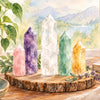
When arranging multiple towers, vary the height rather than lining every piece up in a straight row. A taller tower can act as the anchor, with medium pieces beside it and smaller points in front. This creates depth and lets each crystal remain visible without competing for attention.
Give your towers a little breathing room. Crowding polished points together can hide the details that make them special, especially banding in fluorite, flashes in labradorite, druzy pockets, or intricate inclusions. As a general visual rule, leave enough space around each tower that you can appreciate its silhouette from a few feet away.
Grouping by height is only one option. You can also arrange by color, material, or mood. A collection of soft pink rose quartz, peach moonstone, and warm-toned agate feels gentle and cohesive. Deep amethyst, smoky quartz, and black tourmaline create a more grounded, dramatic corner. If your collection is eclectic, let one shared element tie it together, such as matching trays, similar bases, or a consistent palette in the surrounding decor.
A single statement tower deserves its own moment. Place it on a small riser, beside a framed photograph, or on a stack of two or three favorite books. The goal is not to make it look precious and untouchable. It is to give the piece enough visual space to be seen.
Choose placement based on the feeling you want
Where you place a crystal tower can be as meaningful as how you style it. A bedside table may call for a calming piece that feels personal to you. A desk can hold a tower that helps you pause, focus, or reconnect with an intention before a busy day. An entryway display offers a warm welcome, while a living room shelf can become a conversation piece for guests.
Many collectors enjoy placing towers where they will naturally catch the light. Morning or late-afternoon light can bring out subtle color shifts and internal details in translucent stones. Still, direct sun is not right for every mineral. Amethyst, fluorite, celestite, rose quartz, and other color-sensitive crystals can fade with extended exposure. Keep these pieces out of harsh, all-day sunlight, especially on a bright windowsill.
Humidity and heat deserve the same care. Bathrooms, kitchens, and radiator-adjacent shelves may not suit minerals that are soft, porous, or sensitive to moisture. Selenite, for example, is best kept dry, while some raw specimens can be affected by frequent temperature changes. If you are unsure, choose a room with steady conditions and indirect light.
Build a display that feels collected, not cluttered
A thoughtful crystal display benefits from contrast. Pair the polished geometry of a tower with something softer or more organic: a small plant, a linen runner, a piece of driftwood, a shell, or a raw mineral specimen. The contrast makes the tower’s clean point and polished faces stand out.
Try not to add too many decorative objects at once. If every inch includes candles, trays, books, plants, incense holders, and crystals, the display can lose its quiet impact. Select a few pieces that mean something to you, then let the arrangement rest. Negative space is part of the design.
For an altar or intentional corner, begin with one tower as the center. Add a smaller complementary stone, a meaningful keepsake, and perhaps a candle used only when attended. This can be simple and deeply personal. Your display does not have to follow someone else’s spiritual practice to carry meaning.
For a collector shelf, consider creating small chapters rather than one large cluster. Dedicate one area to rare minerals, another to towers in a favorite color family, and another to pieces you reach for often. This approach makes a growing collection easier to enjoy and easier to rearrange when a new piece arrives.
Use light carefully and let color lead
Lighting changes everything. Warm lamps tend to flatter honey calcite, carnelian, golden healer quartz, and earth-toned jaspers. Cooler daylight can make blues, greens, and iridescent flashes feel especially vivid. A nearby lamp with a soft bulb can turn a quiet shelf into a focal point after sunset.
Skip intense spotlights placed very close to your crystals. Beyond the concern of heat, harsh lighting can flatten the depth and natural texture that make a specimen interesting. Indirect light is usually more forgiving. If you use LED strip lights inside a cabinet, position them so they illuminate the shelf rather than shining directly into each tower.
A mirror behind a small collection can add light and visual depth, but use it sparingly. It works best when the display is simple. With a large collection, reflections can make the space feel busier than it really is.
Care for your towers while they are on display
Displaying crystals means dusting them occasionally. Use a soft, dry microfiber cloth or a clean makeup brush to reach small crevices. Do not assume that water is safe for every stone. Some minerals can dull, weaken, rust, or become damaged with moisture, so dry cleaning is the gentlest default when you do not know a material’s care needs.
Be mindful when moving pieces. Lift a tower from its base with two hands rather than gripping the point, and place it down gently. If you rotate your displays seasonally, wrap each piece separately in soft cloth or tissue before storing it. This helps prevent scratches, especially when harder quartz pieces sit near softer minerals.
It can also be helpful to photograph your favorite arrangements. Not because every display needs to be shared, but because you may discover a layout you want to return to later. A quick photo helps you remember which pieces felt especially harmonious together.
Let your collection evolve with you
The most beautiful crystal displays are rarely finished. They change as your taste grows, your home shifts, and certain pieces begin to mean something new. You may find that a tower once placed on a shelf belongs closer to your workspace, or that a treasured new specimen deserves the place of honor.
At Bellissima Crystals, we believe each hand-selected piece should feel like it was chosen with heart, not simply added to a pile. Trust your eye. Choose a safe place, give your towers room to shine, and arrange them in a way that makes you feel more connected to your own space every time you walk by.