How to Clean Raw Crystals Without Damaging Them
A raw crystal carries its story on the surface: sparkling druzy pockets, earthy matrix, delicate points, and tiny mineral inclusions that make it completely its own. Learning how to clean raw crystals is less about making every piece look polished and more about caring for what nature created. The goal is to remove loose dust and residue while preserving the texture, color, and character that made you choose it.
Raw specimens deserve a softer approach than tumbled stones. A method that is perfectly fine for a sturdy quartz point can permanently dull, crack, dissolve, or discolor another mineral. When in doubt, choose the gentlest option first.
Start by Identifying Your Raw Crystal
Before any water touches your crystal, find out what it is. Mineral names are not just lovely details for a collection card - they tell you how a specimen may react to moisture, pressure, salt, heat, and sunlight.
Harder, more stable crystals such as clear quartz, smoky quartz, amethyst, agate, jasper, and many forms of petrified wood can usually handle a careful, brief rinse. Even then, their natural crevices can be fragile, and a piece may include a softer matrix or a glued repair that changes the rules.
Many beloved minerals should stay dry. Selenite, satin spar, gypsum, halite, calcite, malachite, azurite, pyrite, lapis lazuli, lepidolite, fluorite, celestite, and angelite can be damaged by water or prolonged moisture. Some may soften, flake, lose their finish, develop stains, or release mineral dust you do not want to handle or breathe.
If you are unsure of your crystal’s identity, treat it as water-sensitive. A dry cleaning is almost always the safest place to begin. This is especially true for rare mineral specimens, pieces with crumbly edges, or crystals collected from the earth with visible clay or matrix attached.
How to Clean Raw Crystals With a Dry Method
For most raw crystals, dust is the real issue. A soft, clean paintbrush or makeup brush is often all you need. Hold the specimen over a towel and gently brush away dust with light strokes, working around points and into natural pockets without pressing into them.
A microfiber cloth works well on broad, sturdy surfaces, but avoid rubbing it over druzy, fragile clusters, or sharp terminations. Fibers can catch on delicate crystal formations, and vigorous rubbing can break tiny points that cannot be replaced.
For dust tucked into deeper crevices, use a hand-operated air blower made for cameras or electronics. Keep the air gentle and hold the crystal securely. Skip canned compressed air. Its force can snap fine formations, and the propellant may leave residue on the specimen.
Dry cleaning is not a lesser choice. It is thoughtful preservation, particularly for collector-grade raw pieces whose natural texture is part of their beauty.
When a Gentle Water Rinse Is Appropriate
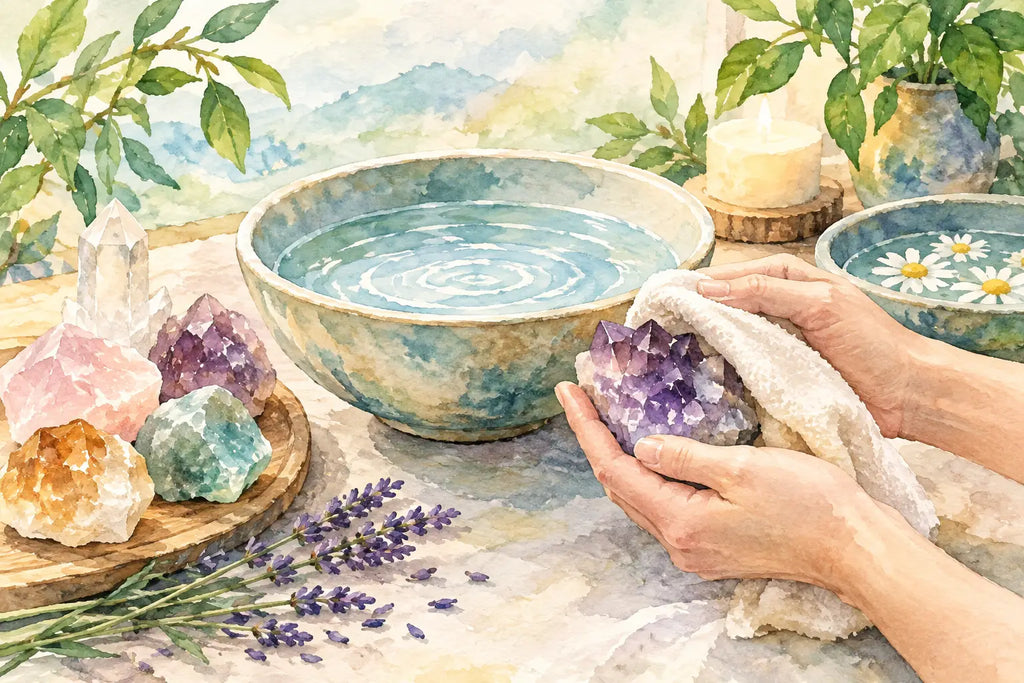
If you have confirmed that your raw crystal is water-safe, a quick rinse may help lift ordinary dust or loose soil. Use room-temperature distilled water when possible. Tap water can leave mineral spots, especially on textured surfaces and crystal clusters.
Hold the specimen under a light stream for just a few seconds, or dip it briefly in a bowl of clean water. Never soak a raw crystal unless you are absolutely certain it is stable and you have a specific reason to do so. Soaking is rarely necessary for a piece intended for display.
If there is a bit of stubborn surface dirt, use a very soft toothbrush reserved only for crystal care. Move gently across sturdy areas, never into a fragile cavity or along a seam. Let the dirt release in its own time. Scrubbing hard can leave scratches or loosen natural mineral formations.
Pat the crystal dry with a soft towel, then place it on a fresh towel in a well-ventilated area until fully dry. Position clusters and geodes so water can drain from pockets rather than sit inside them. Avoid hair dryers, ovens, radiators, and direct heat, which can create temperature stress and cause fractures.
What Not to Use on Raw Crystal Specimens
The temptation to make a raw crystal brighter can lead to damage that cannot be undone. Household cleaners, bleach, vinegar, rubbing alcohol, jewelry dips, and acidic solutions do not belong on most raw crystals. They can etch surfaces, strip natural luster, change color, or react with the mineral itself.
Salt is another common concern. While salt is meaningful in many personal rituals, placing raw crystals in salt or saltwater is risky. Salt can scratch softer specimens, settle into tiny crevices, pull moisture from the air, and leave residue behind. A crystal does not need to be physically buried in salt to be part of a cleansing practice.
Avoid ultrasonic cleaners as well. Their vibration can worsen existing fractures, dislodge delicate points, and damage crystals with internal fissures. This is particularly true for raw clusters, druzy pieces, geodes, and specimens with mixed minerals.
Oil should also be used with care. While some collectors use mineral oil on certain stones to deepen color temporarily, it can alter a specimen’s appearance, collect dust, and be difficult to remove. For a natural, display-worthy raw crystal, clean and dry is usually the most beautiful finish.
Cleaning Crystals With Matrix, Druzy, or Delicate Points
Some of the most captivating raw pieces are also the ones that need the most patience. A crystal growing from matrix may contain several minerals with different levels of hardness and water sensitivity. A sparkling druzy surface can be easily damaged by brushing too firmly. Fine points may look sturdy until a small movement proves otherwise.
For these pieces, use a soft brush and a calm hand. Support the specimen from the bottom rather than lifting it by a point or protruding formation. Work on a folded towel so an accidental slip does not turn into a heartbreaking chip.
If a crystal arrives with a small amount of earth tucked into a natural crevice, consider leaving it there. This is not necessarily dirt that needs correcting. It can be a beautiful reminder of origin and a sign that the piece has retained its natural character. Not every raw specimen is meant to look perfectly uniform, and that is part of its charm.
A Gentle Ritual for Energetic Refreshment
For many people, cleaning a crystal is also a moment of reconnection. Physical cleaning and energetic cleansing are personal practices, and they do not have to involve water, salt, or direct sun.
You might place your crystal on a windowsill with soft indirect light, pass it through incense smoke in a ventilated space, use sound from a bell or singing bowl, or simply hold it for a quiet moment of intention. Some collectors prefer to rest water-sensitive crystals near, rather than on, selenite or satin spar. Choose what feels meaningful to you while respecting the material reality of the mineral in your hands.
Direct sunlight deserves a little caution. Certain crystals, including amethyst, fluorite, celestite, and rose quartz, may fade with long exposure. A few minutes of gentle morning light is very different from leaving a specimen in a hot, sunny window for weeks.
Make Care Part of Your Collection Ritual
Raw crystals stay cleaner when they are displayed thoughtfully. Keep them away from kitchen steam, bathroom humidity, open windows that collect dust, and places where they may be bumped or handled often. Dusting lightly every few weeks is easier and safer than waiting until buildup settles into every crevice.
At Bellissima Crystals, we believe every piece means something, whether it is a grounding stone on your desk, a gift chosen with love, or a rare specimen displayed as part of a growing collection. Caring for it gently is one more way of honoring that connection.
Let your raw crystals look like themselves. A little earth, a natural fissure, or an uneven edge is not a flaw to erase - it is part of the quiet, ancient beauty you invited into your space.