12 Best Minerals for Display and How to Choose
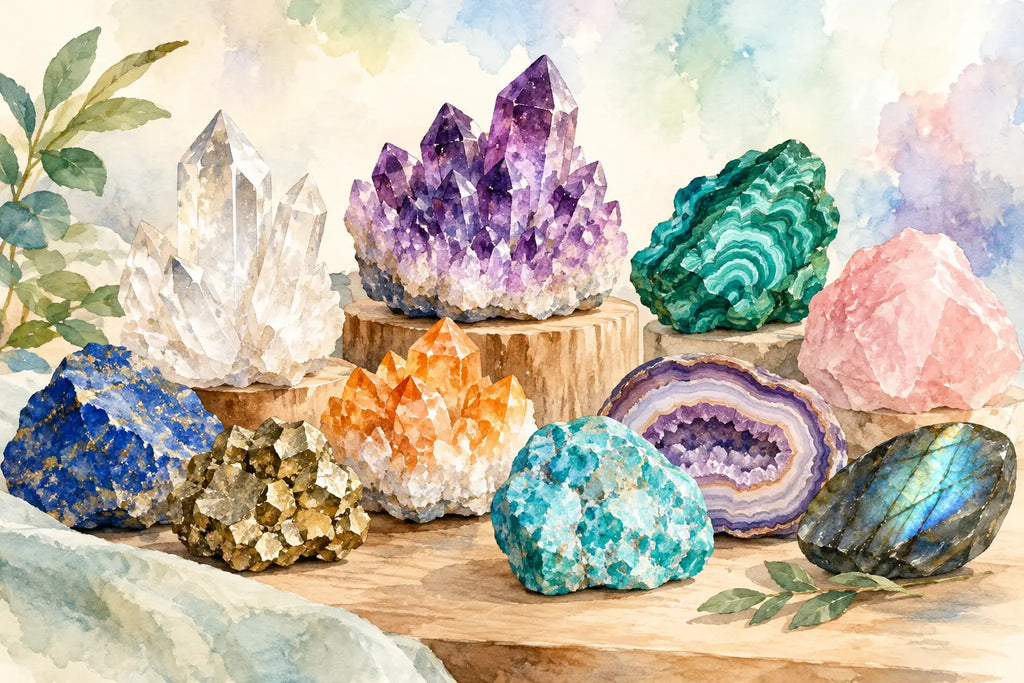
A beautiful mineral display does more than fill a shelf. It gives a room a point of stillness, color, and wonder - a small connection to the Earth that feels entirely your own. The best minerals for display are not always the largest, rarest, or most expensive specimens. They are the pieces with presence: a shape that catches your eye, a color that changes with the light, or a formation you keep noticing long after you have placed it down.
For new crystal lovers, choosing can feel surprisingly personal. For longtime collectors, the joy is often in finding a specimen with exceptional character. Wherever you are in your collection, the right display mineral should feel considered, well cared for, and genuinely exciting to live with.
What Makes a Mineral Display-Worthy?
A display piece needs more than a pretty color. Its visual impact comes from a conversation between form, texture, scale, and placement. A pale crystal cluster can feel luminous on a sunny windowsill, while a dark, metallic specimen may bring depth to a bookcase or desk. One is not better than the other - it depends on the mood you want to create.
Natural formation matters, too. Terminated points, intricate crystal habits, soft druzy surfaces, vivid zoning, and unusual inclusions often give a mineral the kind of detail that rewards a closer look. Polished pieces can be equally striking, especially when a cut reveals bands, flashes, or scenic patterns that might be hidden in raw material.
Condition should be part of the decision. Small chips and contact marks are normal in many natural specimens, particularly delicate clusters. They are not automatically a flaw. Still, a premium display piece should be represented honestly, packed with care, and chosen for the qualities that make it special rather than presented as something it is not.
12 Best Minerals for Display
1. Amethyst
Amethyst earns its place in nearly every collection because it is immediately recognizable yet never quite repetitive. A deep purple cluster brings richness to neutral interiors, while pale lavender points feel softer and more airy. Look for sparkling druzy, saturated color, or graceful point formation rather than judging only by size.
2. Clear Quartz
Clear quartz has an elegant, almost architectural quality. A single terminated point can be minimalist and refined; a cluster can become a brilliant focal point. Because quartz is relatively durable and works with nearly every palette, it is one of the easiest choices for a first intentional display.
3. Fluorite
Fluorite is for the collector who loves color and geometry. Its cubes, stepped formations, and bands of green, purple, blue, or golden yellow can look almost unreal. It does ask for gentler handling than quartz, so keep it somewhere stable and avoid a crowded shelf where it could be knocked over.
4. Apophyllite
Apophyllite clusters bring light into a space. Their glassy, pyramid-like crystals can shimmer beautifully under soft lamps or indirect daylight, and white or clear specimens pair naturally with wood, linen, and neutral decor. Green apophyllite offers a more unusual, fresh color story without losing that bright crystalline sparkle.
5. Labradorite
Labradorite proves that a polished mineral can still feel full of mystery. At first glance, it may appear gray-green, but when light meets it at the right angle, blue, teal, gold, and violet flashes emerge. Choose a freeform or slab with a strong flash across a generous part of the face, then position it where you can enjoy that shifting color.
6. Pyrite
Pyrite brings drama without needing a large footprint. Its metallic luster, crisp cubes, and warm gold tone make it an especially strong desk or bookshelf specimen. It pairs beautifully with black stone, clear quartz, or deep green minerals, but it can also stand alone as a bold, sculptural accent.
7. Celestite
With its icy blue color and delicate crystal clusters, celestite has a quiet, airy beauty. It is lovely in bedrooms, meditation spaces, or anywhere you want a calmer visual energy. Since it is comparatively soft and fragile, reserve it for a secure, lower-traffic spot and handle it minimally.
8. Malachite
Malachite's vivid green banding needs very little help to command attention. A polished freeform, sphere, or slice makes its swirling patterns easy to appreciate, while a raw botryoidal specimen offers a more distinctly mineralogical look. The trade-off is that its strong color can dominate a small arrangement, so let it be the lead piece rather than one of many competing stones.
9. Selenite
Selenite is a favorite for its pearly sheen and gentle glow. Satin spar wands, desert rose formations, and larger carved forms can add brightness without the visual weight of darker minerals. It is very soft, however, and does not love moisture or careless stacking. A dedicated tray or stand is worth the effort.
10. Smoky Quartz
Smoky quartz gives clear quartz a moodier, more grounded counterpart. Its transparent brown to near-black tones are especially beautiful in spaces with warm woods, vintage books, or natural textiles. A well-formed point with visible internal veils or rainbows can make a sophisticated centerpiece without feeling overly ornate.
11. Rhodochrosite
Rhodochrosite brings warmth through shades of rose, raspberry, and blush. Banded polished pieces are wonderful for someone who appreciates pattern, while sparkling crystal specimens offer a rarer collector feel. It is not a mineral to tuck into the background - place it where its color can soften an arrangement of clear, white, or metallic pieces.
12. Azurite with Malachite
Few combinations feel as visually alive as azurite with malachite. Electric blue and rich green often appear together in a way that makes each color more intense. These specimens can be collector favorites, particularly when they show distinct crystals, velvety texture, or a balanced mix of both minerals. Keep them out of harsh, prolonged sunlight to preserve their beauty over time.
Choosing the Best Minerals for Your Display Style
Start with the place where the piece will live, not just the specimen itself. A tall quartz point can bring height to a mantel, while a low fluorite cluster may be better for a coffee table where you will see it from above. For a small shelf, one meaningful medium-sized mineral often has more impact than several tiny pieces competing for attention.
Think about light before color. Labradorite needs an angle that lets its flash appear. Apophyllite and quartz benefit from light that catches their faces. Amethyst can deepen dramatically against a pale wall, while pyrite may look best near warm lamplight. Direct sun is not kind to every mineral, and prolonged exposure can fade some colors, so bright indirect light is usually the safer choice.
You can also decide whether your display should feel curated or collected. A curated vignette might pair three pieces with a shared palette - clear quartz, pale blue celestite, and silver-toned apophyllite, for example. A collected display can be more eclectic, combining a favorite polished labradorite with a raw cluster found later. Both approaches are beautiful when each piece has room to be seen.
Raw, Polished, or a Little of Both?
Raw specimens highlight the Earth's natural artistry. They are ideal if crystal habit, matrix, sparkle, and formation are what make your heart race. Polished pieces make color and pattern more accessible, often fitting more easily into modern interiors or giftable spaces.
There is no need to choose one side permanently. A polished malachite freeform beside a raw pyrite cluster creates contrast in both texture and finish. A smooth labradorite palm stone can soften the sharp geometry of a fluorite cube. The most memorable displays often balance refinement with the wildness of an untouched formation.
A Few Careful Display Habits
Minerals deserve the same thoughtful treatment you would give a cherished piece of art. Use stands for slabs and fragile clusters, leave space between specimens, and dust gently with a soft, dry brush. Avoid placing delicate pieces near edges, in humid bathrooms, or where children and pets may easily reach them.
If you are building a display around a particularly meaningful piece, let that one lead. At Bellissima Crystals, we believe the right specimen is not simply decorative - it becomes part of the feeling of home. Choose the mineral that makes you pause, look twice, and feel something. That is usually the piece that will remain special long after the shelf is styled.