What Makes a Mineral Collector Piece Worthy?
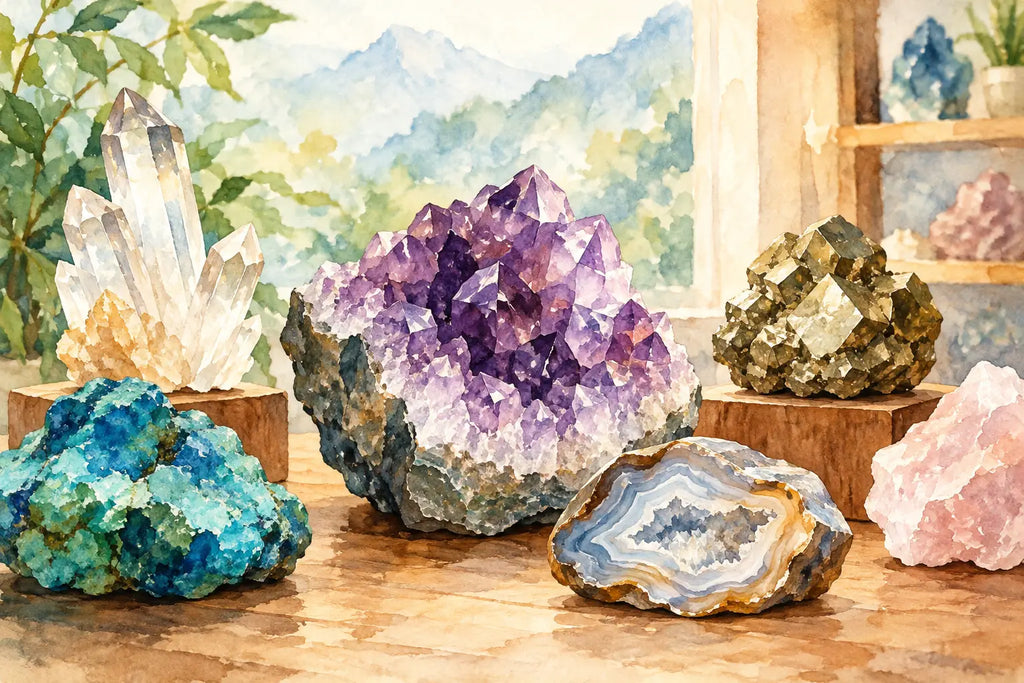
A pale amethyst cluster can be far more collector-worthy than a deeply colored one if its crystals are unusually sharp, its formation is balanced, and its history is clear. That is the heart of what makes a mineral collector piece worthy: not one flashy trait, but the way beauty, condition, rarity, origin, and personal meaning come together in a single specimen.
For some collectors, worthiness means a museum-quality mineral with a documented locality. For others, it is the piece that stopped them mid-scroll, felt unmistakably personal, and still brings them joy every time they see it on a shelf. Both approaches belong in a thoughtful collection. The key is learning to recognize quality beyond size, price, or a trendy name.
What Makes a Mineral Collector Piece Worthy?
A collector-worthy mineral has a distinct point of view. It may show an exceptional crystal habit, a rich color, an unusual association of minerals, or a level of preservation that is hard to find. It does not need to be the biggest specimen in the room. In fact, a smaller piece with crisp geometry and a strong aesthetic composition often has more collector appeal than a large but damaged or common example.
The word "worthy" also deserves a little care. It does not mean every piece must be rare, expensive, or chosen for future resale. A worthy piece is one that meets the standard you are building for your own collection. Perhaps you collect fluorite from specific localities, cabinet-sized quartz with dramatic inclusions, or beautiful palm stones that support a daily spiritual practice. Collecting can be scholarly, aesthetic, intuitive, or a blend of all three.
Crystal quality and visual presence
The first quality most people notice is visual impact. Color, luster, transparency, crystal shape, and composition all influence how a specimen reads at first glance. A well-formed crystal with bright faces and clean terminations tends to feel more special because it clearly shows the mineral's natural structure.
Color matters, but deeper is not always better. Some minerals are prized for saturated color, while others are valued for soft zoning, delicate gradients, or unusual flashes. Fluorite with distinct color bands, labradorite with an electric play of light, and smoky quartz with a warm transparent body can each be compelling for different reasons. Look for color that feels alive rather than flat or artificially intensified.
Composition is the quieter quality that separates a nice piece from one you remember. Notice whether the crystals have room to breathe, whether the matrix supports the specimen instead of distracting from it, and whether there is a natural focal point. A piece can be imperfect and still be striking. A chipped edge may matter less on a rugged, dramatic cluster than on a pristine display crystal where symmetry is the main appeal.
Condition is part of the story
Condition has a real effect on collector value, especially for delicate minerals. Broken terminations, repaired sections, glued crystals, instability, or heavy damage can lower value. None of those details automatically make a piece unworthy, but they should be disclosed and reflected in its price.
Natural contact points are different from damage. A contact point is where a crystal grew against another mineral or surface, leaving an unformed area. It is evidence of how the specimen formed, not necessarily a flaw. Etching, healed fractures, and minor natural imperfections can also add character. The question is whether the condition supports the piece's overall beauty and integrity.
This is why clear photography and honest descriptions matter when shopping online. Ask yourself whether you can see the specimen from more than one angle, whether any imperfections are explained, and whether the seller distinguishes natural features from repairs. Trust grows in those details.
Rarity Means More Than Scarcity
A mineral may be technically rare yet not visually exciting, while a relatively available mineral can be extraordinary in a particular form. Collector rarity is often specific. It may come from a mine that has closed, an uncommon crystal habit, a distinctive color combination, an unusual size, or a notable mineral pairing.
Locality can be especially meaningful. Minerals from certain regions are recognized for their characteristic forms, colors, or historical importance. A specimen with a known origin gives a collector context. It connects the piece to a real geological place and, often, to the people whose work brought it from the earth to a collection.
Still, rarity should not become pressure. A limited find can be exciting, but "rare" is sometimes used too loosely in crystal retail. A responsible seller can explain what makes a specimen uncommon without implying that every purchase is an investment. Market tastes change, supplies surface unexpectedly, and value is never guaranteed. Buy with clear eyes and a genuine love for the piece itself.
Ethical Sourcing Adds Lasting Value
A beautiful mineral carries more meaning when its path has been considered with care. Ethical sourcing is not a vague aesthetic label. It is an ongoing commitment to asking questions about where materials come from, who mined or crafted them, how relationships are maintained, and whether the supply chain is being represented honestly.
Complete traceability is not equally available for every mineral and every region. Small-scale mining can involve many hands before a specimen reaches a retailer. But that reality is a reason for more transparency, not less. Thoughtful curators build direct relationships where possible, seek reliable information from miners and artisans, and avoid making promises they cannot verify.
For collectors, ethical sourcing can shape what "worthy" feels like. Knowing that a piece was selected with respect for the people behind it adds a layer of confidence that mass-market inventory rarely offers. At Bellissima Crystals, careful curation is about honoring both the beauty of the mineral and the story it carries.
Provenance turns an object into a specimen
Provenance is the record of a piece's origin and journey. At its simplest, it may be a locality label. For more significant specimens, it can include the mine, mining district, date acquired, previous collection, or supporting documentation. The more unusual or valuable a mineral is, the more useful this information becomes.
Keep the labels that come with your specimens. If you rehouse a mineral, transfer its locality information to the new label and store any original cards safely. Photograph special pieces when they arrive, including labels and notable details. These small habits protect the story of your collection and make it easier to share, insure, or eventually pass along.
Provenance also helps prevent confusion. Many minerals have similar appearances, trade names, or locations that are easy to misstate. A seller who names a mineral carefully and acknowledges uncertainty when needed is offering something more valuable than a quick sales pitch: confidence.
How to Choose a Worthy Piece for Your Collection
Before buying, give yourself a moment away from the urgency of a live sale or a new-arrivals drop. Study the specimen closely. Does it have a feature you have not seen before? Does its form, color, or locality strengthen the collection you are building? Can you picture appreciating it after the initial excitement settles?
It helps to compare pieces within the same mineral family. If you are choosing between several celestite clusters, for example, look at crystal sharpness, color consistency, matrix quality, damage, and overall balance. Then consider your budget. A smaller specimen with better condition may bring more lasting satisfaction than the largest option available.
For newer collectors, it is completely reasonable to choose with your heart first. You do not need a geology degree to build a meaningful collection. Begin with pieces that invite curiosity, then learn their details over time. An intuitive choice can become the specimen that teaches you what you value most.
For experienced collectors, focus can bring depth. You might refine a collection around a locality, a crystal system, fluorescent minerals, natural versus polished forms, or specimens that show unusual inclusions. A focused collection often becomes more personal and more compelling than one built only around whatever is popular that month.
The Feeling That Keeps You Looking
The best collector pieces reward attention. You notice a tiny rainbow at a new angle, a formation you missed before, or a detail in the matrix that changes how you understand the whole specimen. They hold both visual beauty and a sense of place.
Choose the mineral that gives you that second look. Learn its name, keep its story, and let your collection grow at the pace that feels true to you.